
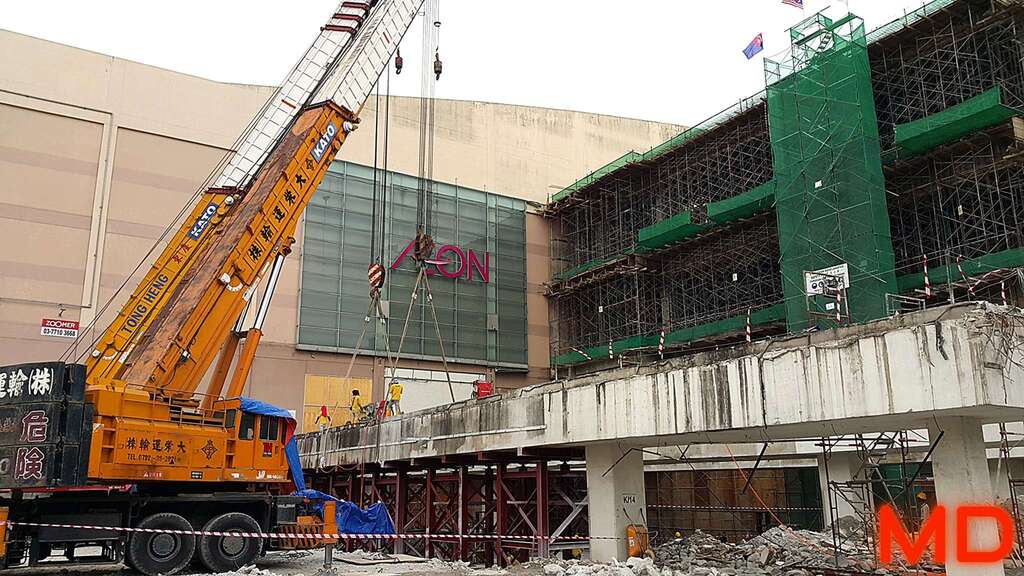
The diamond cutting method is one of the most precise approaches used in controlled demolition, especially when reinforced concrete needs to be cut safely inside occupied buildings, tight access areas, or sensitive refurbishment environments. It is often used when traditional breaking methods may create too much vibration, noise, dust, or disruption.
However, clean cutting does not mean low-risk cutting. Diamond cutting still involves rotating blades, wire saw systems, water slurry, heavy concrete sections, lifting works, and the risk of sudden movement once the final cut is completed. That is why every diamond cutting job must be supported by proper planning, exclusion zones, equipment checks, rigging control, and experienced supervision.
This checklist is designed to help supervisors, safety officers, contractors, and project owners understand what safe diamond cutting should look like before, during, and after the work.
1) Before Cutting Starts
Before any cutting begins, the team must understand the purpose of the cut, the condition of the structure, and what will happen once the concrete section is separated. This is especially important for partial removal, structural alteration, and building demolition works where some areas must be removed while others must remain protected.
A safe diamond cutting job begins with clarity and sequence.
Pre-start essentials
-
- Confirm scope: what gets removed, and what must remain.
-
- Check hidden hazards: embedded services, voids, rebar density, and unknown structural details.
-
- Agree on the cut sequence: an incorrect order can trigger unplanned movement or collapse.
-
- Toolbox briefing: everyone knows the danger zones, communication method, and stop-work triggers.
-
- Quick engagement check: Ask the team, “What happens after the last cut?” If the answers don’t match, you’re not ready.
2) Pre-Use Inspection
Before the first cut, do a quick inspection. Many safety guides emphasise checking blade condition, water delivery, and hoses before use.
5-minute inspection
-
- Blade/wire/wear parts: no visible damage, cracks, or excessive wear
-
- Guards/covers: fitted and positioned correctly
-
- Water feed: flowing to the cutting area
-
- Hoses/cables: secure connections, no damage, routed away from wet zones
-
- Anchors/rails/mounts: tightened and stable
-
- Emergency stop: known and accessible
3) Exclusion Zones
Most serious incidents occur when the danger zone is unclear or ignored.
Your exclusion zone should cover
-
- the cutting area (operator + equipment)
-
- the drop zone (where the piece may fall)
-
- the swing zone (if the piece is rigged and lifted)
-
- the area below (for elevated works)
-
- the “not directly visible” area (behind walls, below floors)
For wire sawing, some operator manuals recommend a safety zone at least twice the free wire length radius in case of wire fracture, and stress that the zone should never be entered during operation.
-
- Make it real
-
- Use solid barricades when risk is high
-
- Put clear signage: “Diamond cutting in progress – No entry.”
-
- Assign a spotter/access controller on shared or high-traffic sites
-
- Protect the rear/hidden side too
4) Rigging & Lifting
The most dangerous moment is often the final cut, when the member separates. That’s when an uncontrolled drop or rotation can occur.
For complex structures, rigging and lifting should be planned together with the demolition sequence, not treated as a last-minute task. In projects involving upper floors, restricted access, or vertical structural removal, methods such as top down demolition may require even tighter coordination between cutting, support, lifting, and material removal.
-
- Rigging essentials
-
- Estimate weight properly.
-
- Use the correct lifting method: chain blocks, crane, hoists, slings, spreader beams, based on geometry.
-
- Prevent rotation: use tag lines and correct lift points.
-
- Keep people out from under suspended loads, no exceptions.
Also, don’t treat “support” as an afterthought. Safety guidance for cutting tools emphasises ensuring the material is adequately supported and can fall away safely as the cut progresses.
5) Water Slurry
Wet cutting reduces airborne dust, but it creates slurry, and slurry creates new risks:
-
- slips and falls
-
- electrical hazards when water meets power connections
-
- overflow into drains, tenant areas, or sensitive zones
There’s also a health angle. Cutting concrete can generate respirable crystalline silica (RCS), a hazardous airborne particulate. Wet cutting helps, but you still need to manage slurry properly, as dried slurry can re-entrain dust. Both OSHA and WorkSafe guidance explicitly recommend cleaning up slurry before it dries to prevent silica dust from being released into the air.
Slurry control that works
-
- Prepare containment: bunding, trays, plastic sheeting, floor protection
-
- Use wet vacs/slurry pumps early, don’t wait until the end
-
- Cover or protect nearby drains
-
- Assign one person to housekeeping during the cut
6) Site Control
Diamond cutting is predictable only when the site is controlled.
Site control becomes even more important when diamond cutting is carried out inside existing buildings, commercial premises, factories, or refurbishment sites. For project owners comparing building refurbishment companies, working with a team that understands cutting, demolition, protection works, and site coordination can reduce disruption during early-stage renovation preparation.
Key site controls
-
- Electrical safety in wet conditions: keep connectors off wet floors, route cables away from water paths
-
- Safe access: clear walkways and dedicated entry points to avoid “shortcut traffic” through the zone
-
- Working at height: edge protection, safe access routes, and fall controls where needed
-
- Lighting: good visibility reduces errors and risky repositioning
-
- Communication: use radios or agreed-upon hand signals
If cutting indoors or in enclosed areas, note that wet methods may still require additional ventilation to reduce visible airborne dust.
7) People Controls
Even the best plan fails if the wrong people execute it.
Non-negotiables
-
- Use trained operators for wire saws, wall saws, and core drilling
-
- Enforce PPE: helmet, eye/face protection, hearing protection, gloves for wet work, slip-resistant safety boots
-
- Make stop-work authority clear: unusual movement, cracking, rigging instability, electrical risk, uncontrolled slurry spread = pause immediately
One simple rule that improves safety fast: don’t stand in the direct “line-of-fire” of a blade during start-up or operation.
“Clean Cutting” Is Only Safe With Strong Control
The diamond cutting method is a strong option for controlled, partial demolition, especially when space is limited, accuracy is critical, and surrounding areas must be protected. But safety does not come from the equipment alone. It comes from proper building assessment, clear cut sequencing, exclusion zones, rigging control, slurry management, trained operators, and disciplined site supervision.

At Multi Demolition, we conduct building surveys to understand the existing structure, then design a demolition plan based on what will be removed and what must remain. Our operators are trained on equipment ranging from wire saws to core drills, so the method fits the site, not the other way around.
If you’re planning internal, partial, or controlled demolition, contact us today!
Resources
-
- Health and Safety Executive (HSE) — Wet cutting (Guidance webpage) — 12 Feb 2025. hse.gov.uk
-
- Occupational Safety and Health Administration (OSHA) — Walk-Behind Saws (Fact Sheet OSHA FS-3633, PDF) — date not shown on snippet (OSHA publication). osha.gov
-
- WorkSafe Queensland — Drivable saws (Guidance webpage) — 28 Apr 2023. worksafe.qld.gov.au
-
- Diaquip — Operation Manual: SWS83 Storage Wire Saw (Equipment user manual, PDF). diaquip.co.uk
-
- Diamond Products — Wire Saw Operation and Safety Manual (Model WS-25) (Equipment safety manual, PDF) — 2006 (per document file). diamondproducts.com
-
- Faithfull Tools — Diamond Cutting Blade Safety Guide (Safety guide, PDF). faithfulltools.com
-
- Norton Abrasives — Diamond Blade Do’s & Don’ts (Safety guidance webpage). nortonabrasives.com